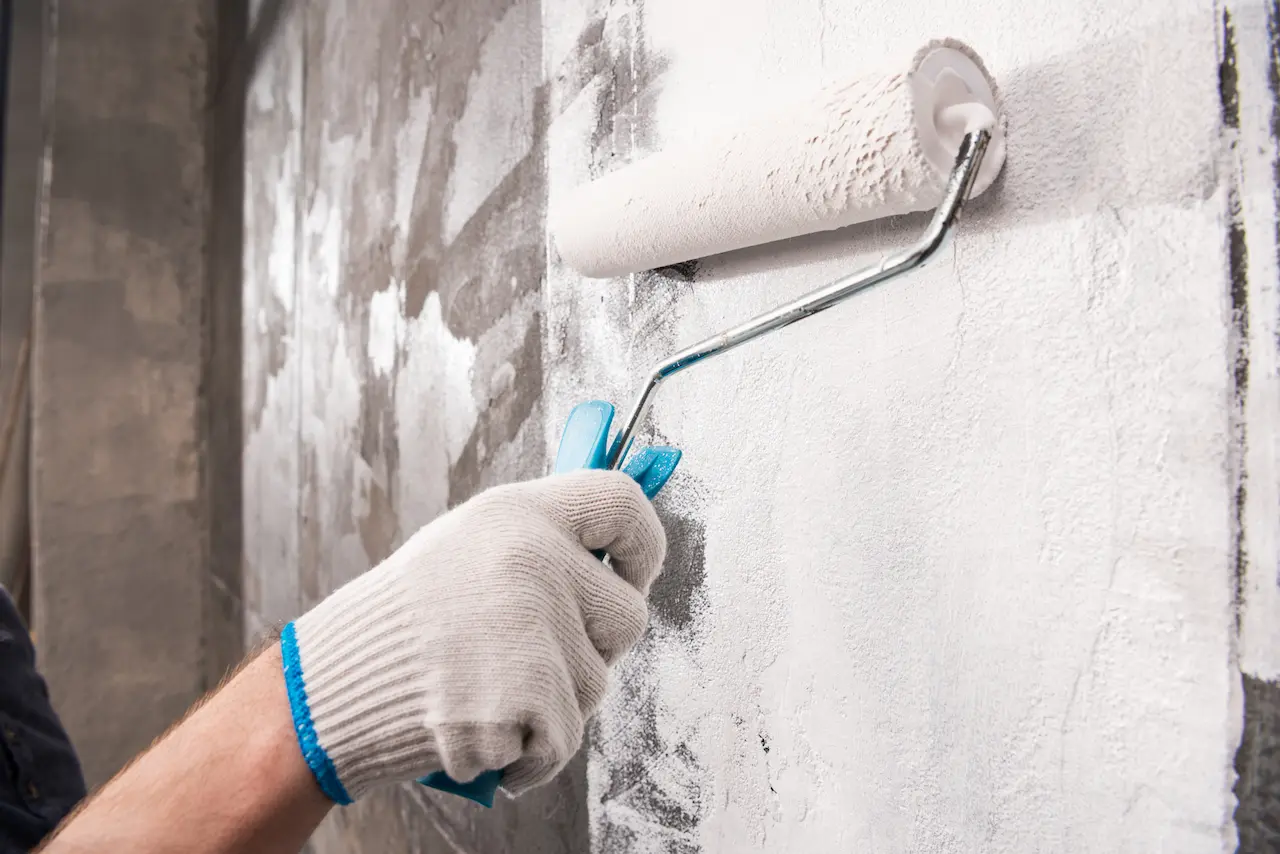
Minneapolis stucco includes Tudors in Linden Hills and Lowry Hill, foursquares in South Minneapolis with original stucco, and modern condos with EIFS facades. Each era needs different elastomeric coating systems. Cowboy Painting LLC has been painting Minneapolis stucco for over 30 years.
Minneapolis has the deepest variety of stucco home styles in the Twin Cities. Original 1910s and 1920s American Foursquares in South Minneapolis often have stucco facades with brick or stone first stories. Tudor revival homes from the 1920s and 1930s in Linden Hills, Lowry Hill, and Lake of the Isles have stucco walls with timber trim. Spanish Colonial revival homes in Kingfield and similar neighborhoods have stucco with red tile roofs. Modern condos in Downtown and the North Loop have EIFS facades. Each era needs different stucco painting approaches.
Cowboy Painting LLC has been painting Minneapolis stucco since the early 1990s. We work historic Tudor and foursquare stucco in established neighborhoods like Linden Hills, Lowry Hill, Kingfield, and Lake of the Isles. We also handle modern stucco on newer infill construction and condo buildings near the urban core. Each Minneapolis neighborhood has typical stucco eras and conditions. The same crew adapts to all of them with the right elastomeric coating products and prep methods.
Minneapolis stucco painting requires careful attention to historic preservation considerations. Many Tudor and foursquare stucco homes in Linden Hills, Lowry Hill, and similar areas are over 100 years old with original stucco that has weathered through extreme Minnesota winters and humid summers. The substrate movement, accumulated paint layers, hairline cracks, and lead paint history all need careful handling. EPA RRP rules apply to pre-1978 homes which covers nearly all Minneapolis Tudor and foursquare stucco stock.
Historic Stillwater limestone block basement foundations have specific challenges. The original 1900s and 1910s limestone is porous and lets moisture migrate through the wall. Decades of paint layers, efflorescence (white mineral deposits), and minor moisture seepage all need addressing before new paint. Lead paint may be present on pre-1978 historic basement walls and ceiling beams. We are EPA RRP certified and follow lead-safe protocols. Containment, HEPA cleanup, and certified procedures are standard on pre-1978 Stillwater basement projects.
Moisture management is the most important factor in Stillwater historic basement painting. Painting over active moisture problems wastes the paint investment within months. We inspect each Stillwater historic basement during the quote for water intrusion, efflorescence patterns, and substrate damage. Active moisture issues need addressing before painting. Sometimes simple drainage fixes solve the problem. Sometimes the issue requires foundation work that we recommend referrals to specialists. Painting comes after the moisture is managed.
Drylok masonry waterproofing primer is standard on Stillwater historic limestone and concrete basement walls. The primer fills pores in the substrate, blocks moisture migration, and provides a base for finish coats. We apply two coats of Drylok on basement walls before any finish paint. The result resists efflorescence regrowth and provides a clean painted surface. Cheap latex primer on basement masonry fails within a year because the coating cannot block moisture through the porous substrate.
Finished basements in Liberty on the Lake, The Bluffs, and similar Stillwater subdivisions have full drywall walls, drop ceilings or finished sheetrock ceilings, and complete trim packages. Painting these basement spaces is similar to main-level interior painting but with humidity considerations. Basement humidity is higher than main-level humidity year-round even in finished spaces. We use mildewcide-added paint products on Stillwater finished basement walls and ceilings standard. Quality products handle basement humidity for 8 to 12 years without showing growth.
Walkout basement painting on Stillwater homes near Liberty on the Lake includes the lower-level walls visible from the rear yard exterior. The walkout walls have full window and door trim plus exterior siding sections that combine with interior basement painting. We coordinate the walkout exterior painting with interior basement work for project efficiency. Most Liberty on the Lake walkout basement painting projects include both interior basement walls and the exterior walkout walls in a single quote.
Some Stillwater finished basements have specialty features like bar areas, home theaters, exercise rooms, or wine cellars. Each function has different paint product needs. Bar areas need water-resistant trim around sinks and counters. Home theaters benefit from darker wall colors that absorb light. Exercise rooms need mildew-resistant products due to higher humidity from sweat. Wine cellars need products that handle constant 55 to 60 degree temperatures and high humidity. We adjust products by basement function during the quote.
Stillwater basement humidity is consistently higher than main-level humidity year-round. The St. Croix Valley adds river-effect humidity in summer. Basement walls are below grade where soil moisture migrates through concrete and limestone. Quality paint products with proper moisture resistance handle these conditions for 8 to 12 years. Cheap interior latex on basement walls develops mildew within 12 months from the constant humidity exposure. The product cost difference is small relative to the labor cost of redoing the work.
Stillwater historic basements have less vapor barrier protection than modern construction. Walls go through bigger humidity swings between summer and winter than well-sealed newer basements. Paint coatings expand and contract with these humidity cycles. Quality coatings with proper flexibility handle the movement without cracking or peeling. Cheap paint cracks at corners and shrinks at trim joints within 18 months on Stillwater historic basement walls. We use Drylok masonry primer plus quality acrylic finish coats on every Stillwater basement project.
Long-term value in Stillwater real estate rewards quality basement work. Buyers in this historic-conscious market notice basement details when touring homes. Active mildew, peeling paint, efflorescence patterns, and visible moisture stains all hurt resale value visibly. Quality basement painting that addresses moisture management and uses proper products adds to home value at sale time. The work pays back on both historic and modern Stillwater homes when done with the right approach for the basement substrate.
Minneapolis stucco painting requires the broadest stucco skill set of any Twin Cities city. Here is what comes standard on every job in this Hennepin County urban community.
EPA RRP-certified protocols on any pre-1978 Minneapolis Tudor or foursquare stucco home with lead paint concerns
Hairline crack bridging with elastomeric coating on stucco over wood lath that moves with seasonal temperature cycles
Stucco patch compound and texture matching on larger cracks before priming for invisible repair on Minneapolis homes
Period color guidance for Tudor revival, Spanish Colonial, and American Foursquare stucco across established neighborhoods
EIFS-specific products for Minneapolis Downtown, North Loop, and Mill District modern stucco condos and infill construction
Urban access protocols for tight property lines including ladder safety, equipment placement, and neighbor coordination
Free on-site quote anywhere in Minneapolis including Linden Hills, Lowry Hill, Kingfield, Whittier, and Downtown condos
EPA RRP-certified protocols on any pre-1978 Minneapolis Tudor or foursquare stucco home with lead paint concerns
Hairline crack bridging with elastomeric coating on stucco over wood lath that moves with seasonal temperature cycles
Stucco patch compound and texture matching on larger cracks before priming for invisible repair on Minneapolis homes
Period color guidance for Tudor revival, Spanish Colonial, and American Foursquare stucco across established neighborhoods
EIFS-specific products for Minneapolis Downtown, North Loop, and Mill District modern stucco condos and infill construction
Urban access protocols for tight property lines including ladder safety, equipment placement, and neighbor coordination
Free on-site quote anywhere in Minneapolis including Linden Hills, Lowry Hill, Kingfield, Whittier, and Downtown condos
Minneapolis stucco painting needs a crew that knows old houses, modern facades, and everything between. Antonio writes the quote.
Older Minneapolis stucco homes have less insulation, causing bigger temperature swings that stress coatings at corners, trim transitions, and existing hairline cracks.
Stucco painting in Minneapolis does not require a permit. Historic landmark properties and conservation district rules apply only to color changes visible from public right-of-way.
Linden Hills and Lowry Hill have the largest concentration of Tudor and foursquare stucco in the Twin Cities. Each style needs specific period-appropriate handling.
We work in Minneapolis from Linden Hills Tudors to Mill District EIFS condos. Each neighborhood has typical stucco eras and conditions we know well.
Recent jobs from homes in the Twin Cities metro. Click any photo to view full size.
On-site visit anywhere in Minneapolis. Written quote covering crack repair, lead-safe protocols, and elastomeric coating system. No fees, no pressure. Same-day response.
Beyond stucco painting, Cowboy Painting LLC offers comprehensive painting solutions for Minneapolis homeowners and businesses.
Walls, ceilings, doors, and trim inside the house. Drywall patching, sanding, primer, and two coats of paint, standard on every job.
View ServiceSiding, fascia, soffits, and exterior trim. Power wash first, scrape loose paint, and use products built for cold winters in Minnesota.
View ServiceCabinets stay in place. We remove doors, sand, prime, and spray for a smooth finish. No brush marks, no drips, no mess.
View ServiceBaseboards, crown molding, doors, and window casing. Caulking, filler, light sanding, and clean cut lines on every edge every time.
View ServicePressure wash, light sand, and apply solid stain or deck paint. We work around the weather so the finish actually cures correctly.
View ServicePine, oak, cedar, and pressure treated wood. We sample stain colors first so you see the tone before coating the whole project.
View ServiceWe work in Minneapolis and the surrounding metro area. Visit our other city pages for local information.